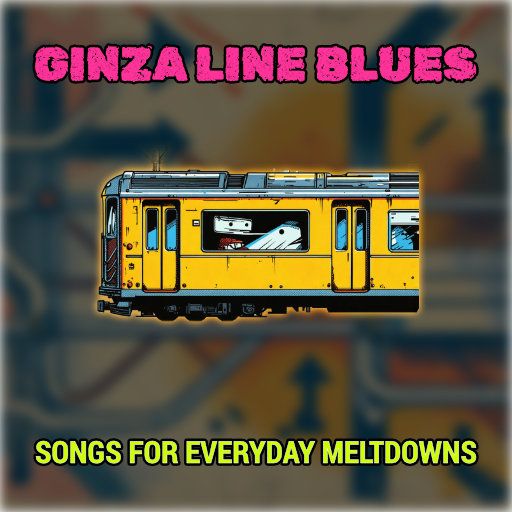
Ginza Line Blues
Acoustic blues meets slushwave in this satirical anthem about Tokyo's sardine-packed subway and the silent, deadly fart that conquered a thousand souls.
Quick Facts
| Attribute | Details |
|---|---|
| Genre | Acoustic Blues / Slushwave |
| Theme | Transit Meltdowns | Tokyo subway sardine-can and silent deadly fart horror |
| Mood | Blues suffering meets slushwave surreal atmosphere with satirical gravitas |
| Best For | Laughing at packed transit nightmares and unspoken communal horror |
| Duration | 3:32 |
| Key/BPM | Dm / 76 BPM |
| Vocalist | Male |
| Instrumentation | Acoustic guitar with hazy slushwave synths and bluesy lament |
The Sardine Can
Sunrise over Tokyo. The Ginza Line pulls in. You're pushed, shoved, packed into a steel box with a thousand other souls—no room to breathe, no space to move, just faces lost in morning gloom. Then it happens: a sudden stench, a toxic cloud, a silent killer that hits like a wall. Eyes water. Noses burn. No one speaks. The horror is universal, the culprit unknown. Welcome to the Ginza Line Blues.
The Sound
Ginza Line Blues combines acoustic blues authenticity with slushwave's dreamy, surreal atmosphere. Male country-style vocals deliver the tale at 76 BPM in D minor—slow enough to feel the suffering, bluesy enough to capture the absurdity. Acoustic guitar provides traditional blues backbone while slushwave synths add a hazy, disoriented quality that mirrors being trapped in that sardine-packed moment. The production walks the line between genuine lament and exaggerated satire, treating the crisis with the gravitas it doesn't deserve.
The chorus hits like punchline timing: "Oh, the Ginza Line blues / But nothing could prepare us for the horror that would start / The Ginza Line blues, brought on by a silent, deadly fart." It's straight-faced enough to be believable, absurd enough to be comedy gold. The blues tradition of suffering meets the modern transit nightmare—because if you can sing the blues about heartbreak, you can sing them about someone dropping their guts on a packed train.
Why It Works
This genre mashup captures the duality of the crisis: acoustic blues gives it the weight of genuine suffering (being packed like sardines is miserable), while slushwave adds the surreal, dreamy quality of being trapped in an inescapable moment. The D minor key and 76 BPM slow-burn let every detail sink in—the push and shove, the collective gasp, the grimace on each face. The punchline structure turns a universal transit nightmare into an anthem. It's satire, but the suffering is real enough that anyone who's survived rush hour knows exactly what this feels like.