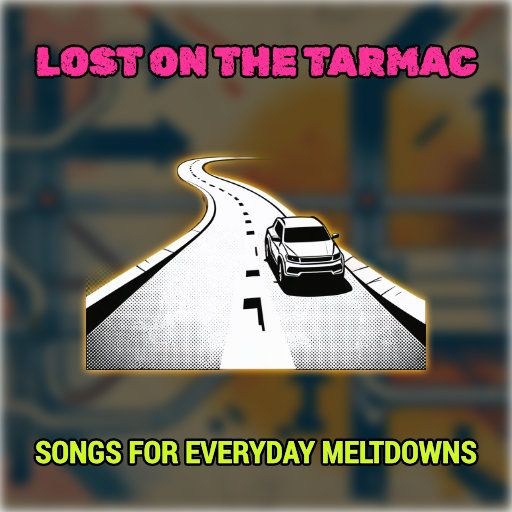
Lost on the Tarmac
Acoustic folk meets post-rock in this dreamy meditation on digital dependency, dead batteries, and the disorienting moment when your GPS fails and you're truly lost.
Quick Facts
| Attribute | Details |
|---|---|
| Genre | Acoustic Folk / Post-Rock |
| Theme | Transit Meltdowns | Dead batteries, GPS failure, and navigation disorientation |
| Mood | Dreamy acoustic folk with post-rock atmospheric sweep |
| Best For | Contemplating digital dependency when technology abandons you |
| Duration | 3:33 |
| Key/BPM | Gm / 84 BPM |
| Vocalist | Female |
| Instrumentation | Acoustic guitar with layered ambient textures and subtle crescendos |
The Dead Battery
Sunrise. Open road. A journey begins with coffee and optimism and a map on your knee—until the screen goes dark. Battery dead. GPS gone. The city lights blink around you, indifferent. You're holding a paper map you can't read, navigating twisted streets with forgotten names, every turn feeling wrong. No north star. No guidance. Just the gnawing realization: you've become so dependent on that glowing screen that without it, you're truly, profoundly lost. Welcome to "Lost on the Tarmac."
The Sound
Lost on the Tarmac blends the intimate warmth of acoustic folk with the atmospheric sweep of post-rock. Female vocals drift through the mix like a whisper in the wind—dreamy, poetic, vulnerable. At 84 BPM in G minor, the track moves with the deliberate pace of someone driving lost, hoping the next turn reveals clarity. Acoustic guitar provides the folk foundation while layered ambient textures and subtle crescendos evoke post-rock's expansive emotional landscapes. The production feels both grounded and ethereal, capturing the disorienting sensation of being physically present but navigationally adrift. This isn't panic—it's contemplative acceptance of being unmoored from digital certainty.
The chorus returns like a mantra: "Lost on the tarmac, no north star to guide / Just the city lights blinking, nowhere to hide." It's sincere, not satirical. The crisis is real—the dependency on technology, the vulnerability when it fails, the quiet dread of not knowing where you are. The dreamy vocal delivery treats the moment with the gravity it deserves, finding poetry in modern disorientation.
Why It Works
This genre pairing captures the emotional duality of the crisis: acoustic folk grounds you in the intimate, human moment (holding a dead phone, feeling helpless), while post-rock expands that feeling into existential terrain—this isn't just about GPS, it's about how tethered we've become to our devices. The ambient treatment reflects the fog of being lost: everything looks the same, landmarks disappear, time slows. G minor at 84 BPM creates space for reflection, allowing each lyric to land with weight. The sincere tone—no irony, no winking—makes the crisis feel universal. Anyone who's watched their battery die at the worst possible moment knows this exact dread. The song doesn't mock dependency; it acknowledges it with poetic honesty.