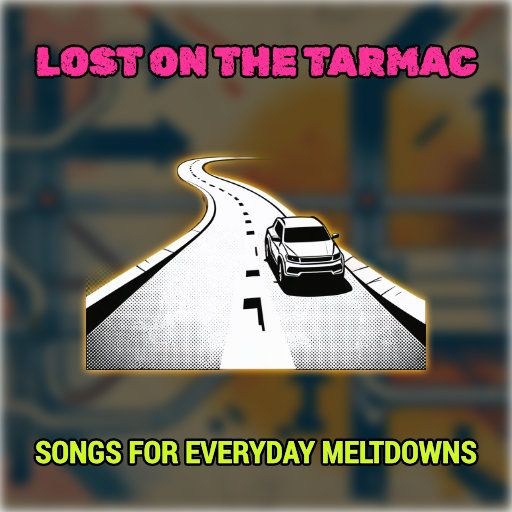
When the Screen Goes Dark: Acoustic Folk Meets Navigation Anxiety
From sunrise optimism to digital dependency crisis—discover how we turned dead phone batteries and GPS failure into an acoustic folk/post-rock meditation on being lost in the modern world.
Why This Crisis?
The screen goes dark. Not slowly—suddenly. One moment you're following turn-by-turn directions, confident in your route, trusting the glowing map. The next: black screen, dead battery, no backup plan. You're holding a piece of glass and metal that's now just expensive dead weight. The city stretches around you—familiar but unreadable. Street names you can't pronounce. Landmarks you didn't notice on the way in. That paper map in the glove box? Might as well be written in hieroglyphics.
Lost on the Tarmac is about the moment digital dependency reveals itself as vulnerability. It's not just about navigation—though GPS failure is the catalyst. It's about how completely we've outsourced basic wayfinding to our devices. How the skill of reading a physical map has atrophied. How being "lost" used to mean consulting landmarks and asking strangers, and now it means staring at a blank screen hoping it will resurrect itself through sheer willpower.
This is a transit meltdown of the digital age: not stuck in traffic, not missing a train, but fundamentally disoriented because the technology you depend on has abandoned you. The crisis is quiet, personal, and increasingly universal. We've all felt that stomach-drop when the battery icon turns red at the worst possible moment.
The Acoustic Folk / Post-Rock Formula
To capture digital disorientation and navigation anxiety, we needed genres that could hold both intimate vulnerability and expansive existential dread:
1. Acoustic Folk Foundation
Folk music is built on storytelling, human voices, and stripped-down instrumentation. At 84 BPM in G minor, the acoustic guitar provides warmth and grounding—this is a real person in a real moment, lost on real streets. The tempo is deliberate, reflective: the pace of someone driving slowly, squinting at street signs, hoping each turn brings recognition. Folk's intimacy makes the crisis personal. You're not watching someone else get lost; you're feeling the helplessness of clutching a dead phone.
2. Post-Rock Atmosphere
Post-rock brings cinematic sweep and emotional layering. Ambient textures, reverb-soaked guitars, subtle crescendos—these elements expand the folk intimacy into something larger. Being lost isn't just a navigation problem; it's existential. Post-rock captures the fog, the disorientation, the way familiar places become alien when you don't know where you are. The genre's patience allows space for contemplation: What does it mean that we can't function without these devices? When did we lose the ability to just find our way?
3. G Minor at 84 BPM: The Pace of Uncertainty
G minor is introspective, melancholic, searching. At 84 BPM, the song doesn't rush—it unfolds like the slow realization that you're genuinely lost. Each verse is a turn down another unfamiliar street. Each chorus is the mantra returning: "Lost on the tarmac, no north star to guide." The tempo mirrors the mental state of being lost: time slows, anxiety builds, but you keep moving forward because stopping means admitting defeat.
4. Female Dreamy Vocal as Poetic Narrator
The vocal performance is crucial: dreamy, vulnerable, sincere. This isn't sung with panic or frustration—it's delivered with poetic resignation. "Battery dead, a silent plea, a whisper in the wind." The dreamy quality reflects the surreal nature of modern dependency: we've built entire infrastructures of trust around devices that can die without warning. The vocal floats through the mix, treating the crisis with the seriousness and vulnerability it deserves. There's no irony here—just honest acknowledgment of how tethered we've become.
The Songwriting Structure
The track follows verse/chorus structure, building emotional layers through repeated refrains and evolving imagery:
Verse 1: The Setup
"Sunrise paints the eastern sky, a promise in the air / Coffee's cold, the bags are packed, a journey we would share." The opening is optimistic—a road trip, a shared adventure, morning light and possibility. Then the pivot: "But then the screen went dark and cold, just static staring back at me." In one line, the journey shifts from adventure to anxiety. The specificity grounds it: not just "my phone died" but "the screen went dark and cold"—visceral, immediate.
Chorus: The Mantra
"Lost on the tarmac, no north star to guide / Just the city lights blinking, nowhere to hide." The chorus is both literal (lost on actual roads) and metaphorical (no guidance system, no certainty). "No north star" invokes pre-digital navigation—celestial wayfinding—now replaced by GPS satellites we can't see or access. "City lights blinking" captures urban disorientation: so many lights, none of them helpful. The mantra repeats because being lost means circling, retracing, hoping repetition brings clarity.
Verse 2: The Unraveling
"The paper map, a foreign tongue, forgotten long ago / Twisted streets and nameless lanes, a silent, creeping woe." Here, the generational shift is explicit: paper maps are foreign language now. The skills we once had—folding maps, tracing routes with fingers—have atrophied. "Every turn a wrong one feels, the landmarks disappear." This is the deepening crisis: not just lost, but losing confidence in any decision. Doubt becomes the only certainty.
Verse 3: The Surrender
"Maybe this is how it's meant, to shed the planned design / To trust the sun, the turning wheels, a fate that intertwines." The bridge offers potential acceptance—perhaps being lost forces presence, forces trust in instinct over algorithm. "No digital command to heed, just instinct and the breeze." There's poetry in the surrender: maybe the crisis reveals something we've lost in our dependence. But it's not triumphant—it's wistful, uncertain.
Final Chorus + Outro
The mantra returns one last time, but the outro shifts: "The road unwinds, a mystery, a lesson in the grey / Sometimes the best discoveries are made when we just stray." Ambiguous resolution. The lesson isn't "technology bad, nature good." It's more nuanced: being lost is uncomfortable, but maybe necessary. The track ends without arriving anywhere—still lost, but accepting the disorientation as part of the journey.
Why This Crisis Matters
Lost on the Tarmac speaks to the invisible dependency we've developed on digital infrastructure. GPS isn't a luxury—it's foundational to how we move through space. We don't memorize routes anymore; we follow blue lines on screens. We don't pay attention to landmarks; we trust the device to remember for us.
When the battery dies, we're exposed: not just navigationally, but existentially. How did we become so helpless? What happens when the infrastructure fails—not just phone batteries, but satellites, networks, servers? The track treats this vulnerability with sincerity, not mockery. Digital dependency isn't foolish; it's human. We trust tools because tools work—until they don't.
The crisis is also generational. Older generations remember reading maps, asking for directions, navigating by instinct and sun position. Younger generations grew up with GPS as default. "Lost on the Tarmac" bridges that gap: the paper map as "foreign tongue" isn't a judgment, it's an observation. Skills atrophy. Dependencies deepen. And when the screen goes dark, we're all equally disoriented.
The AI Discussion
Lost on the Tarmac was created using AI-assisted vocal generation (female dreamy voice), instrumental production, and arrangement tools. The acoustic guitar, ambient post-rock textures, and vocal performance were all generated and then arranged into this slow-burn meditation on digital disorientation.
We're transparent because the irony is too perfect: a song about technology dependency, created using AI technology. But that's not a contradiction—it's the point. AI enables exploration of any theme with sincerity, including our complicated relationship with the tools we build. No human singer needs to pretend they've never experienced GPS anxiety. No producer needs to hide that they used digital tools to critique digital dependency. The result is a track that shouldn't exist but absolutely needed to: sincere acoustic folk about the existential dread of a dead phone battery.
Join the Crisis
We invite you to acknowledge your own digital tethers:
- Dead Battery Confessions: Share your worst "phone died at the worst moment" stories with the track as soundtrack. TikTok tag: #LostOnTheTarmac
- Paper Map Challenge: Film yourself trying to navigate with only a physical map. Document the confusion. Own the helplessness.
- Pre-GPS Memory Lane: Ask older relatives how they navigated before smartphones. Compare to your own skills (or lack thereof).
- Playlist: Navigation Anxiety: Create a collection of songs about being lost, wandering, disorientation. Add this track. Contemplate dependency.
The power of this crisis is its quiet universality. If you've ever watched your battery percentage drop while desperately needing directions, you've lived this moment. Share the anxiety.
Why It Works
Lost on the Tarmac succeeds because:
- Genre Fusion Reflects Experience: Acoustic folk provides intimate grounding; post-rock expands to existential scope—mirrors the personal/universal nature of digital dependency
- Sincere Treatment Validates the Crisis: No mockery, no satire—treats GPS anxiety and battery death with poetic seriousness, making it relatable
- Universal Modern Vulnerability: Dead phone batteries are the most democratic crisis—happens to everyone, always at the worst time
- Ambiguous Resolution: Track ends without arrival—still lost—which feels honest; not all crises resolve neatly
- Generational Commentary Without Judgment: Acknowledges skill atrophy (paper maps as "foreign tongue") without blaming anyone; just observation of how we've changed
This isn't a novelty track. It's a sincere acoustic folk/post-rock meditation on how dependent we've become on devices, and what happens to us when they fail. The dead battery isn't the crisis—it's the revelation.
The real crisis isn't the dead phone. It's realizing you traded navigation skills for battery life and still wouldn't charge it differently tomorrow.
When the Train Stops for Nothing: Acoustic Blues Meets Tokyo Transit Horror
From morning sardine-can to silent deadly weapon—discover how we turned the universal nightmare of packed subway flatulence into an acoustic blues/slushwave masterpiece of urban satire.
When the Elevator Stops at Every Floor: Disco Revival Meets Vertical Purgatory
From lobby urgency to penthouse anxiety—discover how we turned slow elevator ascents, endless stops, and jazzy muzak into a disco revival anthem about transit claustrophobia and time running out.