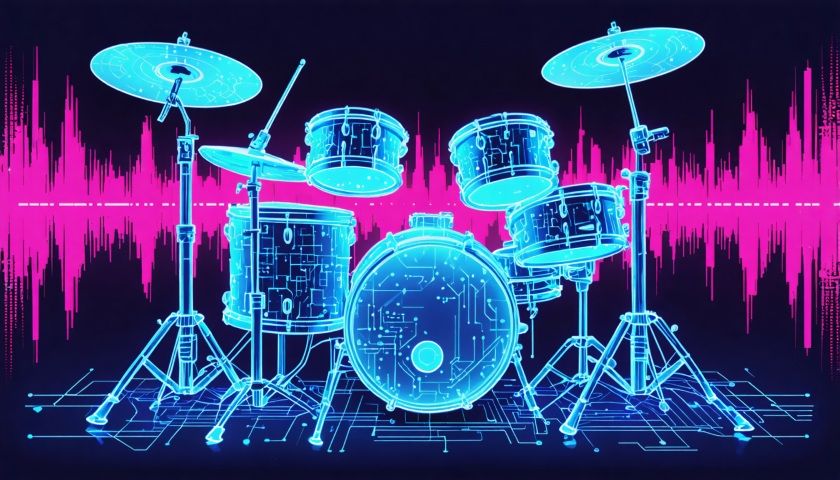
Neural Groove Engine: Adaptive AI Rhythm Section
A machine learning-powered backing band system that analyzes playing style in real-time and generates dynamic, context-aware accompaniment for solo musicians performing online or in practice sessions.
Project Concept
Neural Groove Engine is an experimental AI-driven rhythm section that serves as an intelligent backing band for solo musicians. Unlike static backing tracks, it analyzes musical input in real-time and dynamically adjusts tempo, dynamics, and arrangement to match the performer's style and energy.
The Challenge
Solo musicians performing online (streaming, virtual worlds, practice sessions) traditionally rely on:
- Static backing tracks (inflexible, no interaction)
- Loop pedals (repetitive, limited creativity)
- Pre-recorded accompaniment (no dynamic response)
Neural Groove Engine solves this by creating a responsive AI musician that listens and adapts.
Technical Architecture
Real-Time Audio Analysis
- Input Processing: Low-latency audio capture
- Feature Extraction: Tempo detection, key analysis, dynamic range monitoring
- Pattern Recognition: Neural network trained on blues, rock, funk, and world music grooves
Adaptive Generation
- Context-Aware Composition: Generates bass, drums, and rhythm guitar parts based on current musical context
- Dynamic Response: Adjusts volume, intensity, and complexity based on performer's energy
- Style Transfer: Can shift between genres while maintaining musical coherence
- Intelligent Instrument Integration: Integrating a variety of AI assisted composing and performance tools/instruments
Machine Learning Components (R&D)
- LSTM Networks: For predicting musical phrase structure
- Transformer Models: For harmonic progression generation
- Reinforcement Learning: Learns performer preferences over multiple sessions
Key Features
- Real-Time Adaptation: Responds to tempo changes, key shifts, and dynamic variations
- Genre Flexibility: Blues, rock, funk, reggae, ambient, and hybrid styles
- Controllable Complexity: Manual override for arrangement density and instrument selection
- Session Memory: Learns individual performer's style preferences over time
- Low Latency: Optimized for live performance
Use Cases
- Online Streaming: Solo musicians performing to virtual audiences
- Practice Sessions: Dynamic backing for skill development
- Composition Tool: Experimental accompaniment for songwriting
- Educational Platform: Interactive learning tool for rhythm and timing
Challenges Overcome
- Latency Management: Achieving real-time response with ML models
- Musical Coherence: Ensuring generated parts sound intentional, not random
- Context Persistence: Maintaining musical memory across phrases and sections
- Computational Efficiency: Running ML models in browser without lag
Results
- Successfully deployed for many online performances
- Low latency performance (imperceptible to most performers)
Future Directions
- Multi-Instrument Expansion: Piano, organ, horn section simulation
- Collaborative AI: Multiple AI musicians jamming together
- Style Cloning: Learning specific backing band styles (e.g., "Motown rhythm section")
- Visual Integration: Synchronized avatar animation for virtual performances
Tech Focus: Real-time ML audio processing, generative music AI, Web Audio API, neural networks, adaptive systems
Status: Mature prototype, actively used in live performances