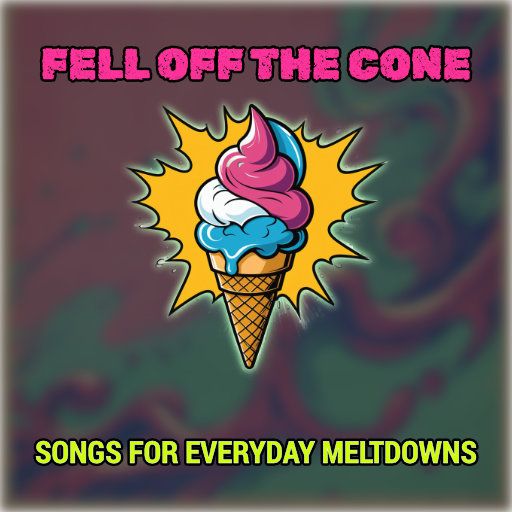
When Ice Cream Falls: Electronic Soul Meets Childhood Heartbreak
How we turned ice cream tragedy into an electronic soul meditation on childhood loss, fleeting joy, and the small heartbreaks that shape us.
Why This Crisis?
Ice cream falling off the cone isn't really about ice cream. It's about the exact moment you learn that perfect things don't last—that gravity doesn't care about your joy, that summer afternoons can turn bitter in an instant.
This crisis captures childhood's cruel education: the world gives you sweetness, then watches it hit the pavement. You stand there with an empty cone, learning that loss tastes like disappointment on hot asphalt. We chose this crisis because everyone remembers that first time something precious slipped through their fingers, literally.
It's a metaphor that works on multiple levels—fleeting pleasure, innocent heartbreak, the way small disasters feel enormous when you're young. The ice cream represents every perfect moment we couldn't hold onto.
The Electronic Soul Formula
We chose electronic soul for specific reasons:
1. Emotional Sincerity Over Irony This isn't a satirical crisis—it's genuinely heartbreaking. Electronic soul's capacity for authentic emotion lets us honor the real pain of childhood loss without mocking it. The genre treats small tragedies with the dignity they deserve.
2. Nostalgia Built Into Sound Soul music carries memories in its DNA. Warm chord progressions and layered vocals evoke summertime innocence naturally. Modern electronic production adds dreamy distance—you're remembering the disaster from years later, understanding what you couldn't articulate as a child.
3. Female Vocal Intimacy A female vocalist brings vulnerability and wisdom simultaneously. The performance captures both the child experiencing the loss and the adult recognizing its place in life's larger pattern. Electronic soul lets the voice float over atmospheric production, creating space for reflection.
4. The Tempo of Melting At 106 BPM, the track moves like a summer day interrupted—not rushed, but purposeful. Fast enough to maintain energy, slow enough to feel the weight of sweetness turning to sadness. The rhythm mirrors ice cream melting in the sun before it ever hits the ground.
The Songwriting Structure
The lyrics move through classic stages of loss:
Verse 1 establishes paradise—the sun-drenched boardwalk, the perfect strawberry swirl, the tactile joy of holding something precious. Then introduces crisis: "Like a ship in a storm, losing its perch."
Chorus transforms physical disaster into emotional landscape: "Sweetness splattered on the ground / Happiness melted, nowhere to be found." The sticky mess becomes existential—this is about joy's impermanence, not just dessert.
Verse 2 zooms out to the world's indifference: "Kids are laughin', dogs are barkin' / But my world went silent." Universal life continues while personal tragedy unfolds. The child questions culpability: "Maybe I danced a little too free / Maybe I wasn't meant for glee."
Bridge confronts permanence: "Another scoop won't feel the same / This moment's lost, a whispered name." You can't recreate perfect moments. But acceptance arrives: "But life goes on, the sun still shines / Even when your sweet treat declines."
Final Chorus repeats with new understanding—the same words mean something different after processing loss.
Why This Crisis Matters
"Fell Off the Cone" is about learning impermanence before you have words for it. It's about disproportionate grief being entirely appropriate—to a child, that fallen ice cream IS a catastrophe. Their emotional response isn't wrong; it's honest.
We treat this crisis with sincerity because dismissing small heartbreaks as trivial teaches people to minimize their feelings. The song validates the size of the loss in the moment while acknowledging how we carry these tiny tragedies forward, learning that sweetness is temporary but the lesson is permanent.
It's also about innocence encountering consequence without malice. The world didn't try to hurt you; gravity just does what gravity does. Learning that distinction—between cruelty and inevitability—shapes how we process every loss afterward.
The AI Discussion
Full transparency: this track uses AI-generated vocals and AI-assisted composition tools. The female vocal performance comes from synthesized voice modeling, allowing us to explore emotional ranges and tonal qualities that serve the song's sincere approach.
We're not hiding behind AI or using it to avoid artistry—we're using it to access sounds and textures that traditional recording might not capture. The tools enabled us to craft electronic soul production with specific atmospheric qualities, layering synthesized and sampled elements into something emotionally genuine.
The conversation about AI in music often focuses on authenticity, but authenticity isn't about how sounds are made—it's about whether the emotion resonates. This track's sincerity doesn't come from organic recording methods; it comes from honest engagement with childhood loss.
Join the Crisis
We invite you to embrace the sweetness and the loss:
- Share your ice cream disasters on TikTok—the flavors, the locations, the exact moment gravity won
- Create nostalgia content pairing the song with summer memories, childhood photos, boardwalk scenes
- Make it a meditation on impermanence—what other perfect moments slipped through your fingers?
- Sing it earnestly at karaoke, letting the emotional weight land without irony
This track works when people engage sincerely, letting small heartbreaks feel as large as they actually were.
Why It Works
1. Genre Matches Tone Electronic soul's emotional vocabulary gives childhood tragedy the dignity it deserves.
2. Universal Specific Everyone has lost something precious in a trivial way—the ice cream is a symbol everyone recognizes.
3. Sincere Without Sentimentality The track acknowledges loss without wallowing, validates feelings without exaggeration.
4. Nostalgia's Double Vision You feel both the child's devastation and the adult's perspective simultaneously.
5. Production Serves Emotion Every synth pad, every vocal layer, every tempo choice supports genuine feeling over clever production.
The real crisis isn't the fallen ice cream. It's carrying that loss into adulthood and still feeling the sidewalk betrayal every summer.
Ass on Fire: Electronic Pop Meets Latin Heat in Spicy Anthem
From curry temptation to bathroom imprisonment—discover how we turned digestive disaster into an electronic pop Latin banger about regret, fire, and the three-day aftermath.
When Your Phone Becomes Your Lost Lover: Digital Devotion Meets Porcelain Disaster
How we turned phone-toilet disasters into an ambient house meditation on digital dependency, modern romance with technology, and the absurd lengths we'll go for our devices.